CISO Talks: Why Data Classification Needs a New Approach
CISOs in a five-city tour called data classification one of their biggest challenges. Here's why manual labeling fails and what they want instead.

Key Takeaways:
- Across CISO Executive Network roundtables in five cities, very few could say their data discovery and classification was highly automated.
- Manual classification breaks down when employees ignore labels, misclassify data, or downgrade sensitivity to make sharing easier.
- AI is resurfacing over-shared information and generating new content that no one has classified.
- Security leaders want automatic, context-aware classification that keeps pace with data movement without adding more work for employees.
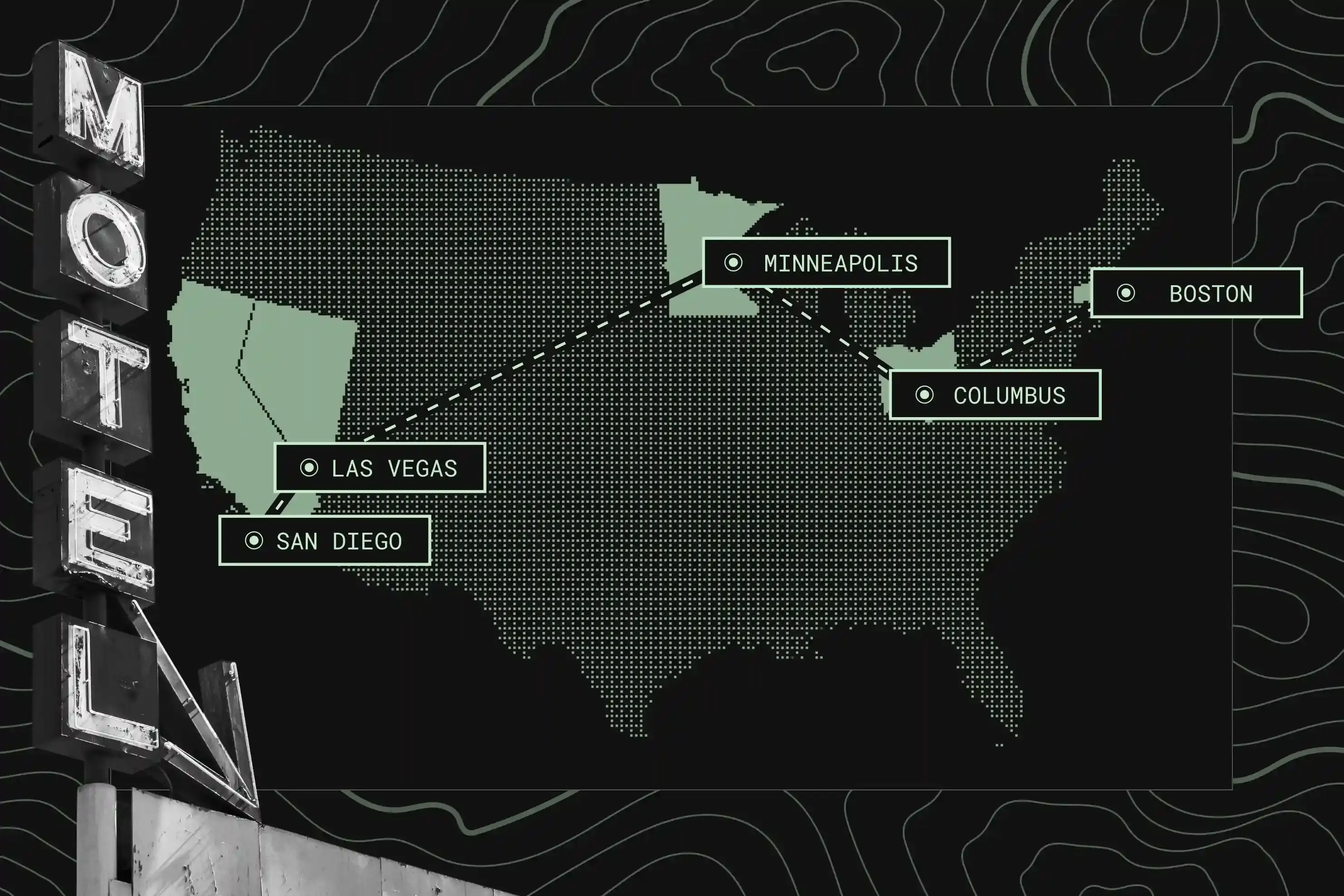
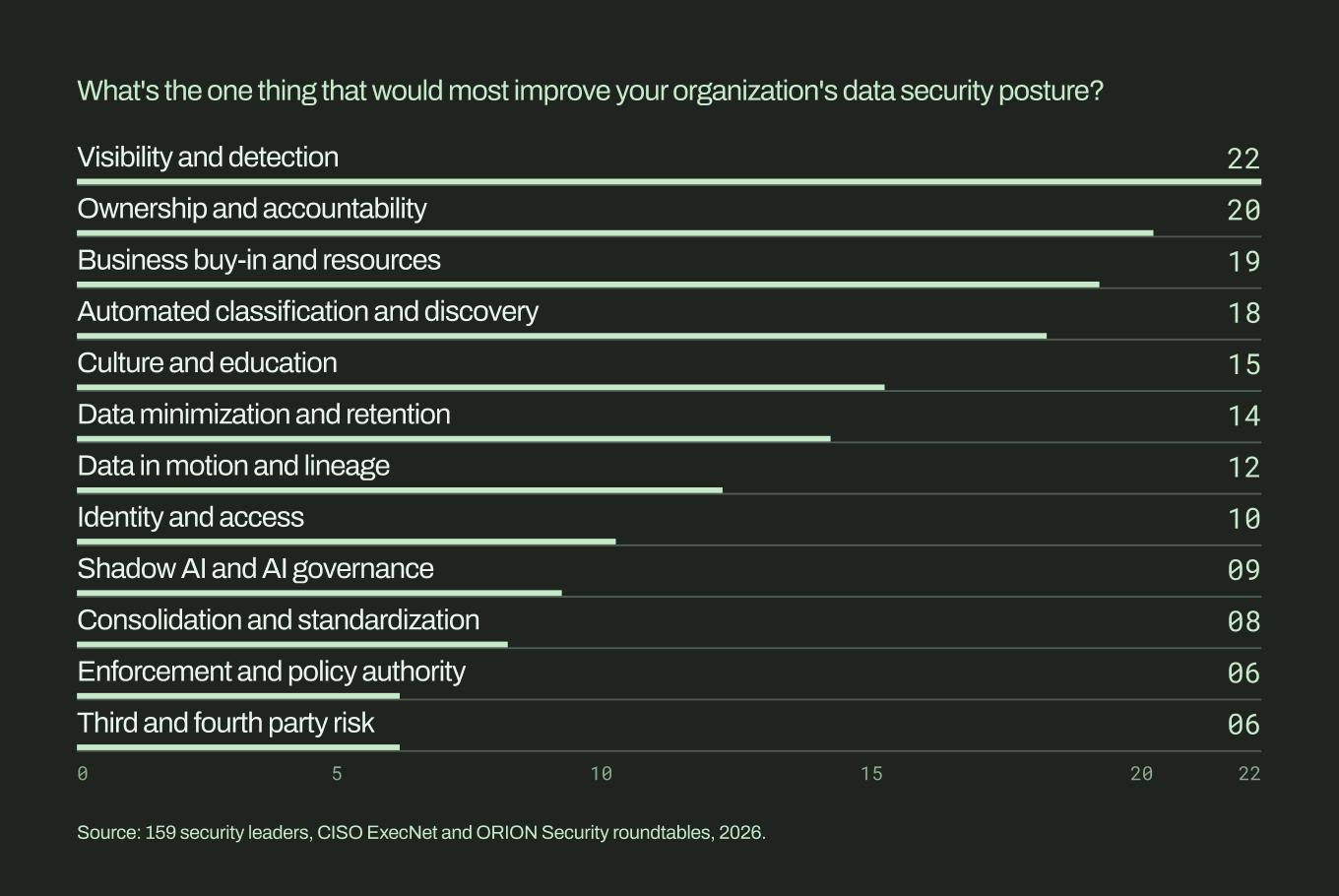
When CISO Executive Network asked 159 security leaders this summer what would most improve their organization's data security, automated classification and discovery came in fourth. But as we noted in the first article in this series, it sparked some of the most animated discussion in every city we visited, from Boston to San Diego.
A second poll helps explain why. Asked to rate how well they discover and classify sensitive data across cloud, SaaS, and AI environments, very few said they were highly automated.
In Columbus, where the roundtable drew CISOs from across the Great Lakes region, one of 37 respondents claimed high automation. In San Diego, no one in the room did. The moderator called Boston's showing the strongest of any region so far. Even there, most respondents said their programs were only partially automated.
Across the five cities, security leaders described familiar frustrations with manual labeling, outdated discovery exercises, and the growing volume of data that needs protection. AI is making those problems harder to ignore.
Here's what they told us about why the old approach is falling short, and what they want in its place.
Employees and the Data Classification Challenge
Most classification programs still depend on employees to label their own files. That creates an obvious problem: The people responsible for applying the labels are often the same people who find those labels inconvenient.
Security leaders across the five cities described employees ignoring preset labels, downgrading classifications to get work done, or deliberately mislabeling sensitive information so they could share it more easily.
One casino CISO in San Diego has tried to turn that incentive around. At his company, employees who want to downgrade a classification must get a manager's approval. The idea is to make misclassification harder than following the rules.
There can also be legal consequences. An attorney who addressed the San Diego group warned that companies that routinely mislabel sensitive information may weaken their ability to claim trade-secret protection in a misappropriation lawsuit.
When AI uses company information to generate new content, who is responsible for classifying that output? And who owns it?
And even when employees make a good-faith effort, the sheer volume of data can overwhelm them. One former security leader described manual tagging across her company's SharePoint environment as insurmountable.
The frustration was consistent across the roundtables: Security teams can't build an effective data protection program around the assumption that every employee will correctly identify and label every sensitive file.
Classification Projects That Go Stale
Even perfectly labeled data presents another problem: Classification is often treated as a periodic exercise, while data is constantly changing.
A regulatory requirement or security incident triggers a discovery project. Teams identify sensitive information, apply labels, and move on. Months later, another event sends everyone back through the same exercise.
By then, the picture has changed. New data has been created, existing data has moved, and sensitive information may have appeared in places nobody thought to check.
At the Boston roundtable, a privacy and security leader at a software company described a particularly troubling example. During an incident response tabletop exercise, her team discovered cloud storage buckets they believed were clean. In reality, those buckets held personal data for roughly eight hours every day before it was purged.
A periodic scan could easily miss that window. An attacker might not.
More frequent discovery doesn't necessarily solve the problem, either. Several security leaders described the operational burden of classification and monitoring tools, including the flood of alerts, constant tuning, and additional work that follows deployment.
They want continuous visibility into sensitive data without creating another full-time job managing the results.
The Same Data Can Change Sensitivity Overnight
Classification gets even more complicated when the sensitivity of information changes depending on its business context.
Consider a part number in an engineering file. On its own, it might seem like ordinary business information. But what happens when that part is sold to a defense customer?
A governance, risk, and compliance leader at a large industrial manufacturer described exactly that problem. The part number suddenly becomes subject to federal controls, but the company's systems have no way to track the change.
His team can find the data, but it can’t automatically connect that data to the business relationships, owners, and regulatory requirements that determine how it should be protected.
Healthcare presents similar challenges. At the San Diego roundtable, security leaders discussed confusion over de-identified versus tokenized data and the different definitions of de-identification under HIPAA, GDPR, and California privacy law.
These examples expose a fundamental limitation of static labels. Knowing what a file contains is important, but it doesn't always tell you how sensitive that information is, who should have access to it, or whether a particular use creates risk.
One law firm security director offered a useful perspective. At his firm, nearly everything is sensitive. What matters more is understanding where the data came from and where it's going.
AI Is Creating Data Faster than Anyone Can Label it
AI makes these longstanding classification problems more urgent, starting with information companies have already accumulated.
For years, organizations relied partly on obscurity to protect over-shared data. Employees might technically have access to thousands of documents, but they didn't necessarily know those documents existed.
AI assistants change that. They can search across everything a user's permissions allow, surfacing sensitive information that may have sat untouched for years. Security leaders in Boston and the Great Lakes region described the risks of old SharePoint files, emails, and other over-shared information suddenly becoming easy to find.
At one roundtable, a security leader at a semiconductor company raised a question that no one could fully answer: When AI uses company information to generate new content, who is responsible for classifying that output? And who owns it?
The same problem extends to AI agents that create, transform, and share information as part of automated workflows. Traditional classification programs weren't designed to evaluate that activity as it happens.
Security leaders also acknowledged some unresolved questions. How much does context-aware AI classification cost at scale? What happens to sensitive legacy data that never moves? And how much responsibility should employees retain for classification decisions?
Those concerns matter. But the pressure to enable AI without creating more manual work is only growing.
Protect your data the moment it moves.
ORION Security automatically classifies sensitive data as it moves, using content and context to make real-time protection decisions without manual labeling or lengthy classification projects.

What Security Leaders Want Instead
Across five cities, security leaders described a remarkably consistent set of priorities:
- Automatic classification that doesn't depend on employees tagging files
- Continuous evaluation as data moves, rather than periodic scans
- Decisions informed by content, user behavior, destination, and business context
- Controls that guide employees without unnecessarily interrupting their work
The CISO of a Boston-area test equipment manufacturer captured the appeal of this approach. He wanted a contextual understanding of his company's data and its value, with real-time controls layered on top.
"Boy, I'd pay some money for that," he said.
Other participants were equally pragmatic. If classification can never be fully completed, why wait for it before protecting sensitive information? Several argued for evaluating data as it moves to AI tools, personal email accounts, and file-sharing services, and making enforcement decisions at that moment.
That doesn't always have to mean blocking an action.
The Boston moderator shared an example of a company that prompted employees before they sent restricted data outside the organization. The message asked them to confirm the action and warned that their manager would be notified. According to the moderator, incidents dropped sharply.
An insurance CISO described a related experiment: quarantining suspicious emails sent to personal accounts while allowing employees to release them through a self-service portal.
Both approaches address risky behavior at the point where it matters, without asking employees to classify another document.
The larger shift emerging from these conversations is toward classification that keeps pace with how data is actually used, rather than depending on labels applied long before anyone knows where that data will end up.
Meeting the Data Classification Challenge
Classification wasn’t at the very top of security leaders' priorities this summer. Yet nearly every challenge they discussed, from data visibility and ownership to AI governance, depends on understanding which information is sensitive and how it should be protected.
The roundtables revealed growing interest in a different approach: one that makes classification continuous, considers business context, and allows security teams to act when sensitive data is moving.
The challenge now is to make smart decisions about protecting sensitive data as it moves, whether anyone has labeled it or not.